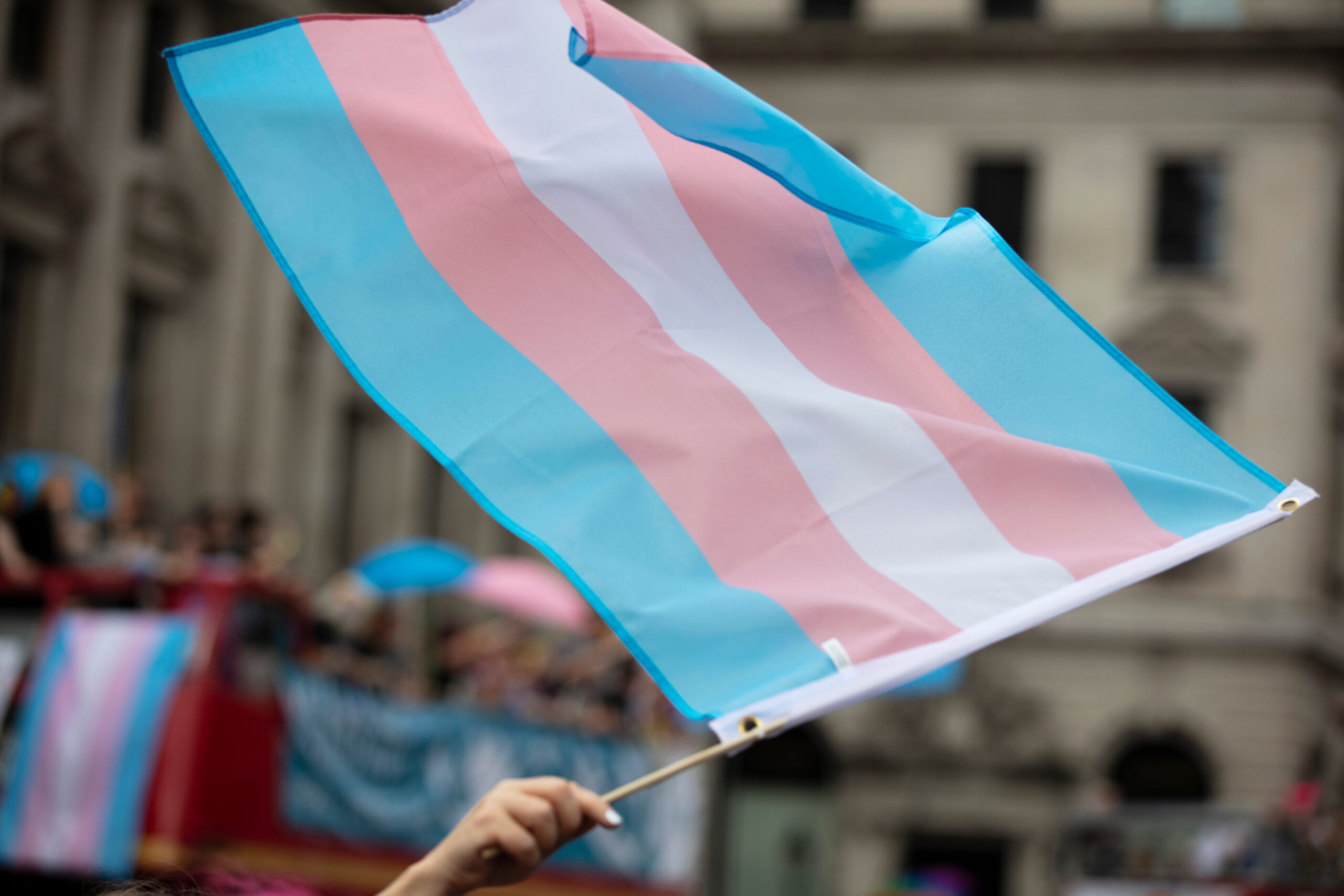
In recent times, the United States has been a particularly unwelcome place for many people. The recent rise of anti-trans bills that are being introduced nationally have attempted to limit the rights of transgender and gender non-conforming Americans. This increasingly negative attitude toward transgender individuals has especially affected the livelihood of many Americans.
Being authentic to oneself is beginning to feel like a crime for many across the nation. To see how local attitudes are towards the emerging social climate, The kNOw decided to interview trans and gender non-confirming individuals here in Fresno and ask them what freedom means to them.
What Does Freedom Mean in Relation to Gender Identity in the Current Social Climate?
Ashens Limon: “Freedom is just being able to be who I am without anyone policing that.”
Ashens Limon began transitioning socially at a young age, even before he knew exactly who he was. As he grew older, he started going by the name “Ashens” and began using they/them pronouns, eventually shifting to he/him.
When asked what freedom meant to him in relation to his journey and gender identity, he shared the following:
“I think it’s the ability to be who I am and not having to think about the political connotations of it.”
Ashens believes that a person’s identity should not be a politically debated topic, and that human rights should be granted to all individuals regardless of how they choose to identify. He continued on to say that, as an adolescent, the anxiety of not being seen as a boy made it hard for him to even communicate with others.
“It put me into my shell and caused me a lot of anxiety because I was so, so scared of being misgendered,” he said.
Thinking back on his life experiences and what made him feel more comfortable in himself, Ashens remarked that the ability to medically transition, a right that is currently being threatened in many states, is what allowed him to freely express both himself and his gender identity. Being able to start gender-affirming medical care allowed Ashens to be who he was without worrying whether or not he was passing.
“I don’t think that as a transgender man you have to fit into the masculinity or femininity box at all. But I do feel that for a lot of us, until we are transitioned far enough where we can at least pass, we feel like we can’t really express ourselves properly. Hormones and getting top surgery made me able to wear the clothes that I want to and express myself the way that I want to.”
Ashens said he was grateful to live in California due to the many extreme laws being passed in other regions, and said that transgender and gender non-conforming individuals, especially youth, not being able to access hormones and other therapies could be dangerous.
“I think that that’s gonna kill a lot of young people,” he said.
However, being in California doesn’t exempt Ashens from all worries; he said the political climate here in Fresno has pushed him to “reevaluate [his] identity and how people might perceive [him].” While Ashens finds Fresno to be “safe,” he tends to avoid red-leaning towns like Clovis due to how people in these cities tend to view anyone gender non-conforming or transgender, though he doesn’t find it fair
“I don’t think I should be [avoiding red-leaning areas], because I think that I deserve to be seen. There’s transgender people in the world, people have to learn to deal with it.”
For Ashens, being around transgender people has allowed him to feel understood. He finds conversations with others who can relate to his experiences affirming.
“We both really understand each other on such a deeper level and we can have these conversations that really I can’t have with cisgender people or cishet people, where there are certain concepts that cishet people don’t understand because they’ve never experienced it or they’ve never felt like they were in between in a way. I think just surrounding myself with transgender people and being in space is just so healing for anybody with an identity,” he said.
The future, for Ashens, lies in the hands of the youth. Ashens recounts that as a student, he had never personally experienced transphobia with other students; it was the adults around him who would treat him weirdly. The older people around him, whose job was to help guide Ashens, played a part in making him feel othered. He believes that many young people are accepting of transgender and gender non-conforming identities and this acceptance can shape society views moving forward.
“I think that the future is really bright when it comes to young people in politics. They are the change in the world. I don’t think it’s hopeless whatsoever. I think that things will change. It’s just kind of a matter of time and a matter of the right young people getting up there and working to be a part of today’s politics or the future of politics.”
Wren Tiyaamornwong: “I feel like freedom means feeling safe and secure in how I express myself.”
Wren Tiyaamornwong began to experiment with his gender expression during high school, but it wasn’t until college that he started to express himself outside of the cisgender scope. He began transitioning medically around four to five years ago and has felt more comfortable in being himself since then. Gender-affirming health care allowed him to feel secure in how he chose to express himself as a transgender man.
When asked what the word freedom meant to him regarding his identity and journey, Wren shared the following.
“It’s [freedom] not necessarily dependent on how other people perceive me, because I already know what I’m about and feeling safe and secure in that sense is most liberating to me. It doesn’t matter if other people see me as feminine or as a woman or whatever because I know what I’m about.”
For Wren, what’s most important is not how others view him, but how he sees himself. Living in an authentic and genuine manner is how Wren lives his life freely.
“If there was only one specific way to be trans, it would dull the very definition of that freedom. I think if everybody kind of just let go of whatever preconceived notions they have about gender, everybody could be a little more free,” he said.
While Wren finds his own self-perception most important, he emphasized that gender-affirming care is crucial for the well-being of many transgender and gender non-conforming people and can save a person’s life.
“Gender-affirming care is lifesaving. I don’t know if I would even be in the same spot right now if I didn’t have access to gender-affirming care.”
One issue Wren continues to be personally affected with, however, are policies regarding documentation that are impacting transgender and gender non-conforming individuals. Different state policies restrict what a person is allowed to change, and the grueling nature of the process to make gender-affirming legal changes, such as gender marker changes or name changes, are also dependent on these state policies. Recently many documentation changes have become restricted on a national level as well.
While the process to make documentation changes in California is significantly easier than in other states, Wren has found himself struggling with what making these changes would mean for him later on. He believes that timing the moment you change your gender marker, name and more legally is difficult when policies could easily change in the future. While he wants to make documentation changes as soon as possible, he finds himself debating if now is the best time to do so when these changes could possibly put transgender and gender non-conforming Americans vulnerable at risk.
“It’s disheartening to know that I keep having to push back and push back when I’m able to do these things. With all of the documentation, you never know what’s going to happen, so you kind of have to silence yourself in a way to make sure you stay safe. And I think that compromises a lot of freedom,” he said.
However, Wren believes that while the current reality may seem bleak and obsolete, it will not remain that way.
“I think communities, whether it’s people of color [or the] queer community – we’ve survived so much and it’s really, really, painful right now and people don’t know what’s gonna happen, but I think the best thing we can do is express joy where we can. And hang onto it just to ride out the storm, because it’s all temporary. It’s a curse but it’s also a blessing that everything is temporary. Even the bad stuff.”
Young people, according to Wren, should not forget that they have a community behind them who can understand what they are going through and help guide them when needed.
“You can’t choose your family, but you can choose your friends, and I think having a space where you can feel safe with those friends is all you can ask for,” he said.
Lucas Brito: “Freedom [is] an allowance of being able to be who I am.”
Lucas Brito has known they were non-binary since high school and has since been on a journey of self-exploration. Lucas had a conservative childhood, with a Catholic family in which being able to explore and experiment with who they are was out of the question.
“I never really understood, especially when I was so young, that I could really do whatever I wanted with my gender identity,” they said.
What changed things for Lucas was meeting another transgender person. Their friend, as described by them, was open in being himself. Not only did he show Lucas that there were more options available in life, he also helped Lucas be more comfortable with themself. This friend gave Lucas their first binder and the feelings that came from that were extremely liberating for them.
“I kind of craved [my friend’s] freedom; in a way, it awakened something in me that has always been dormant,” they said.
Lucas was inspired to experiment with their own expression of their identity with aspects such as their hair. Being able to cut their hair, especially after not being allowed to as a child, opened a door for Lucas.
“[Freedom means] be myself in the most authentic way that I am and I’m still figuring it out. I also feel freedom means that you can figure [your identity] out at any point in time.”
As an adult, Lucas is able to wear what they believe affirms them. Experimenting with colognes and perfumes and choosing to chest bind or not are different ways in which Lucas can choose to present themself to reflect who they are. However, while their own self perception is important, how others choose to perceive them has a significant impact on Lucas.
“What affects me more is the way others perceive me, rather than how I perceive myself. Sometimes when I perceive myself I am very comfortable, but when others don’t get the way that I want to be perceived, that is very upsetting at times,” they said.
This dissonance in perception has caused issues in Lucas’ life, especially in relation to health care, in situations where doctors do not understand them.
“Being able to have access to a primary [care provider] that is open to just affirm me and [is] able to understand, somebody who would have knowledge of people and different gender non-conforming people would definitely be more comfortable.”
Having to prove oneself in order to get gender-affirming hormone therapy is another uncomfortable experience that Lucas believes medical professionals should work on to create a more comfortable environment for all people, including those who identify as transgender and gender non-conforming.
“I feel like it would’ve been a way easier journey [had] I been with someone who understood me in that sense,” they said.
Uncomfortable experiences as a non-binary person, unfortunately, are not limited to just the doctor’s office for Lucas. As political tensions rise in the United States, many transgender and gender non-conforming individuals, including Lucas, have had to fear for their safety and peace of mind when traveling. Lucas finds that while living in California may make some situations easier, the fear of leaving the state is still very real and they worry that traveling would force them to confine themselves and present as someone they aren’t.
“It kind of feels like I would almost have to go undercover,” they said.
Though it may seem like an easy fix if they get their documents changed to reflect their identity, the usually exciting moment has its own challenges. Similarly to Wren, the long process creates doubt and discouragement for Lucas, who argues that transgender and gender non-conforming individuals should not be forced to contemplate these ideas.
“I’m a person who maybe doesn’t align with the binary of what other people perceive, but at the end of the day, I am a human being.”
The bare minimum that Lucas asks for is to be respected and for people to not use incorrect pronouns or their deadname when referring to them.
At work, Lucas has frequently experienced these disheartening instances in which clients and colleagues alike have gone out of their way to be vindictive toward them. Lucas recalled one instance in which a colleague had spoken negatively about Lucas and their identity when they were not present.
The disrespect experienced by Lucas is not a unique experience either. Many transgender and gender non-conforming people have experiences such as these and no ability to make their situation better.
“It makes me very scared because if it’s just happening here in this small bubble at work, I can’t imagine having to go to federal offices or having to go through that process and having to advocate for myself in a system that makes me feel so alone,” Lucas said.
Amidst all of the changing policies and hate that Lucas has experienced, they find hope in the youth. In their eyes, young people are not scared of stepping up and advocating for themselves and their communities.
“When I see younger people who organize, who speak up for themselves, who speak up for other people, that really gives me hope.”
Lucas says that to be joyful is a resistance in its own right and that finding others who are part of your community can bolster that joy.
“There’s power in numbers and there’s definitely community members out there who do feel the same way as you do and who want to empower you and who want to bring you joy.”
Lucas thinks that holding onto hope even when the situation feels bleak is most important, along with reminding one another that you are there and you exist and you are valid when faced with stressful times such as these.
“Just remember that we’re people too and that we just want [to] be alive, [to] exist. We just want to exist and I don’t think that’s a crime. I really don’t.”
A Look Toward The Future
Individuals like Ashens, Wren and Lucas have agreed that in the light of the anti-trans policies being promoted throughout the nation, community is more important than ever. As long as people continue to stand up and advocate for one another, negativity cannot continue to exist.
Individuals who want to support transgender and gender non-conforming communities can do so by educating themselves on the policy changes both statewide and nationally and can help spread positivity and acceptance by consulting the Human Rights Campaign’s “Support Trans Equality” guidelines for more information. Transgender and gender non-conforming individuals in need of support can connect with the Trans Lifeline at translifeline.org or (877) 565-8860. Youth can connect with The Trevor Project at thetrevorproject.org or (866) 488-7386.