When imagining the foundation of American culture, many will paint a picture of “rugged individualism”: a self-made man setting his sights on success, building from the ground up and succeeding through good old-fashioned hard work. The idea of the “American Dream” was packaged and manufactured with the promise that, with enough self-persistence and “picking yourself up by your bootstraps,” anyone could become successful and self-sustaining. While this is flawed for many reasons, including the exclusion of the barriers that minority groups face when chasing this dream, it laid the groundwork for the hyperindividualistic, apathetic and unsustainable socioeconomic situation the U.S. finds itself in.
The United States has a problem referred to as “an epidemic of loneliness” by the Department of Health and Human Services. Marriage, household sizes and fertility rates are dropping drastically. Social circles, community participation- and trust in one another keep on shrinking. Through the years 2003-2020, social isolation increased by an average of 24 hours per month. Only 30% of Americans stated they felt they could reliably trust one another, and only 16% of Americans said that they felt attached to their local community. While social connection is usually viewed as an individual responsibility, social policies, culture and social infrastructure play a large role in the interconnectedness of a community. Social infrastructure, such as libraries, community centers and volunteer programs, are developed and maintained through policy. With governmental shifts away from the community and towards individual success and monetary wealth, these programs and projects go increasingly unfunded.
At the root of this social disconnect is the United States’ culture of individualism and, coincidentally, its longing for a purely capitalistic free market. Individualism is the concern with individual interests over the well-being of a collective. While individualism is venerated for its encouragement of innovation, personal responsibility and self-control, pure individualism can result in weak social bonds, a high-stress culture, poor work-life balance, a lack of communal support and a lack of collective responsibility. While the U.S. is not a purely capitalistic economy, the basis for capitalism is woven into nearly every thread of our culture: pursue self-interest, maximize profit and “win.” Pure capitalism posits that there should be no constraints on the pursuit of self-interest and wealth. This culture encourages Americans to accumulate more and more capital, pursue individual self-interest and neglect communal support. The United States has operated under the idea that more is better and that freedom means the absence of any constraint.
In the words of sociologist and civil activist William A. Donahue, “Just as having too much good food sours the stomach, too much individualism sours society.”
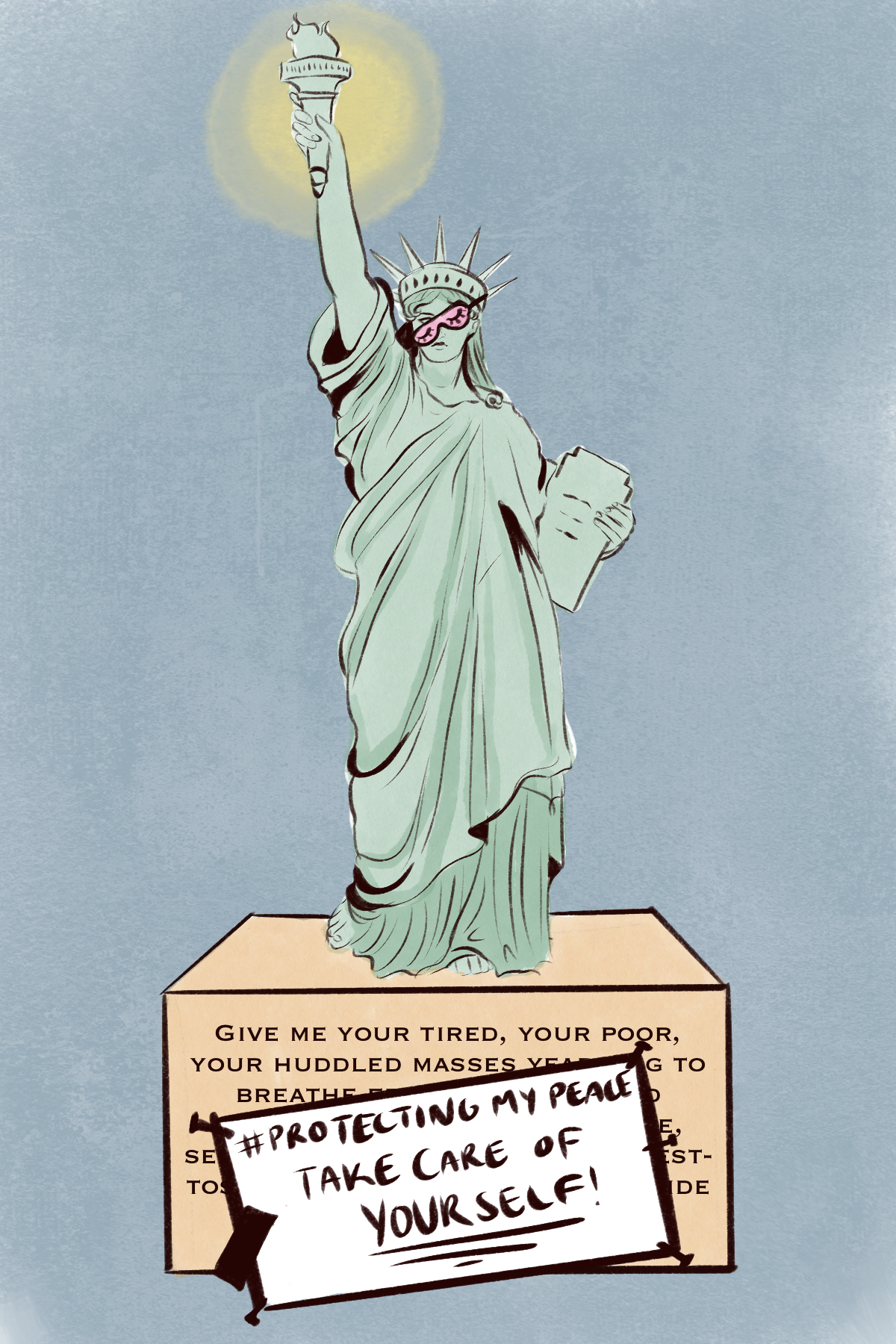
Another flaw with pure individualism is the idea that dependence is a failure, as Ines Rozzo explores in their Miscellany News opinion piece. Anyone scrolling on social media for more than five minutes may have heard the terms “protect your peace” or “you don’t owe anything to anyone.” While boundaries and self-care are vital to mental and physical health, it appears that we have tipped over the edge into isolation. Of course, we owe acceptance, effort and a listening ear to our friends. Social relationships sometimes require inconvenience to achieve well-being that extends outside of oneself.
“The same reluctance to sacrifice for friends translates into a reluctance to support social programs for strangers. Hyper-individualism breeds apathy, and apathy is poison to democracy,” writes Rozzo.
When Americans oppose social safety nets like healthcare, unemployment and nutrition assistance, they expose the deep-rooted belief that suffering is individual, not collective, and that community welfare is not their responsibility. The belief that each individual is responsible for their own personal “bubble” and that the suffering of one is inherently separate from the whole eventually devolves into civic apathy. Volunteering, voting, organizing and advocacy quickly disappear, and democracy, which is rooted in participation, crumbles.
An example that has been empirically studied is the United States’ response to COVID-19 in comparison with other nations. Compared to other nations, the U.S. experienced high mortality rates, partially attributed to inconsistent policies on vaccinations, masking and social distancing. Protective and preventative measures became heavily politicized under the Trump Administration, and herd immunity and consideration for others were often forgone in pursuit of self-interest or political beliefs. A study conducted at Florida State University in 2023 showed findings that suggested that those with collectivist orientations were associated with a greater likelihood of mask wearing, social distancing, concern for infecting others and trust in medical professionals.
It seems that embracing a balance of collectivism and individual freedoms is the answer to solving the isolation and division in our nation. To do so, we can look to the collectivist cultures that are often found in Asia, Latin America, Africa and the Mediterranean. These cultures embrace social support, foster a greater sense of belonging and encourage cooperation instead of “survival of the fittest.”
“Life revolves around shared meals, mutual care, and an understanding that your well-being is bound to the well-being of others. To be human, in those societies, is to be surrounded by other people,” writes Rozzo.
To start, Americans can begin connecting with their neighbors. Exchange contact information, create a neighborhood Facebook group and look out for one another. Join a club, volunteer at a nonprofit or organize a weekly meet-up with your friends. Joining together as a community is the best way to encourage interconnectedness and foster a collectivist culture.