To youth, freedom is not merely about independence, but about voice, opportunity and efforts to shape one’s future. Students at Kerman High School describe freedom as the ability to think critically, express themselves authentically and speak openly.
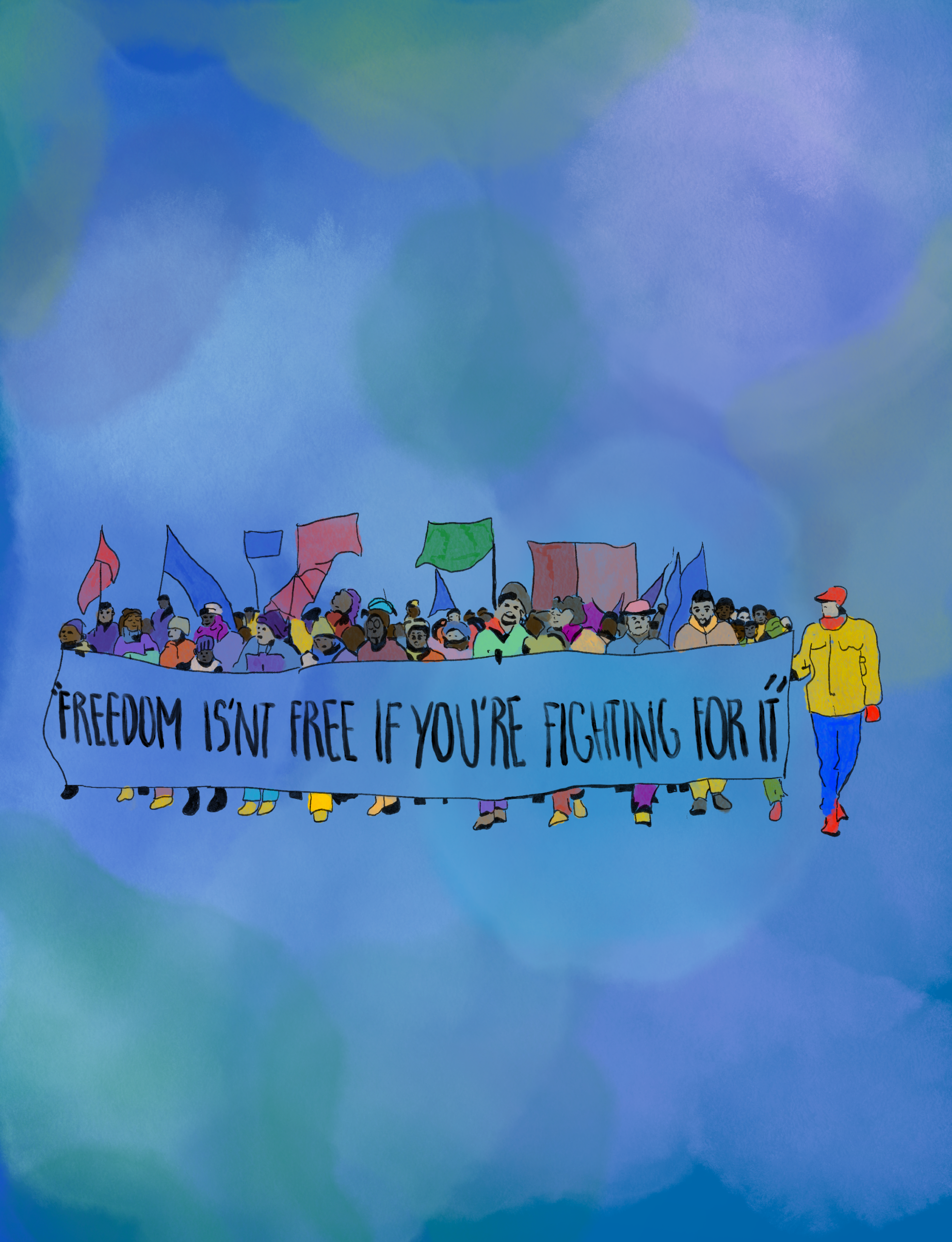
“Freedom is not free if you’re fighting for it. Freedom should be a birth right. When advocating for freedom, you’re not actually speaking freely – you’re being restrained,” said Junior Diaz, a Kerman High School student.
His words highlight the First Amendment’s admission that freedom, as a protected and guaranteed right, shouldn’t require justification.
Young people in the nation continuously demonstrate that they’re not observers, but leaders. At Kerman High School, students exemplify this through civic engagement efforts such as assisting organizations with voter registration and peaceful protests. Their actions show that youth have the capability of courage and long-term vision.
“To me, freedom means to have rights given without advocating for them. It means to have the ability to feel comfortable where you are without feeling oppressed or inferior to another individual,” said Aliyah Diaz, a Kerman High School student.
Her statement underscores the desire of not only having legal rights, but for belonging and a society in which equality is lived and not just a promise.
Kerman High School professor Jacob Skinner said that as a young person pursuing higher education, he came to see freedom less as absolute liberty and more as a system that is led by economic hierarchies.
“Going to college, being able to learn about different understandings of history, learning about different cultures and philosophies, showed me that what we think of as freedom in America, is not necessarily freedom. It’s still structured on capitalist powers of the haves and the have nots. The haves have more power than the have nots. Learning that idea opened my eyes to see that when it comes to freedom, we’re still ‘owned’ by those who have the power,” said Skinner.
Freedom to youth means to have the freedom to grow without being silenced. When youth speak out about issues that impact their families and communities, they exercise a fundamental democratic right.
“To be free would mean to have the rights that the constitution proposes. It means to have the freedom to express oneself and be in the working society without feeling oppressed,” said Junior Diaz.
Freedom allows young people to express themselves respectfully, seek knowledge and engage with others – even those with opposing views. It means using platforms not for harm, but rather to progress as a society. Instead of dismissing young voices as immature or uninformed, young people are calling to be recognized for the moral clarity they can bring to conversations and urgency.