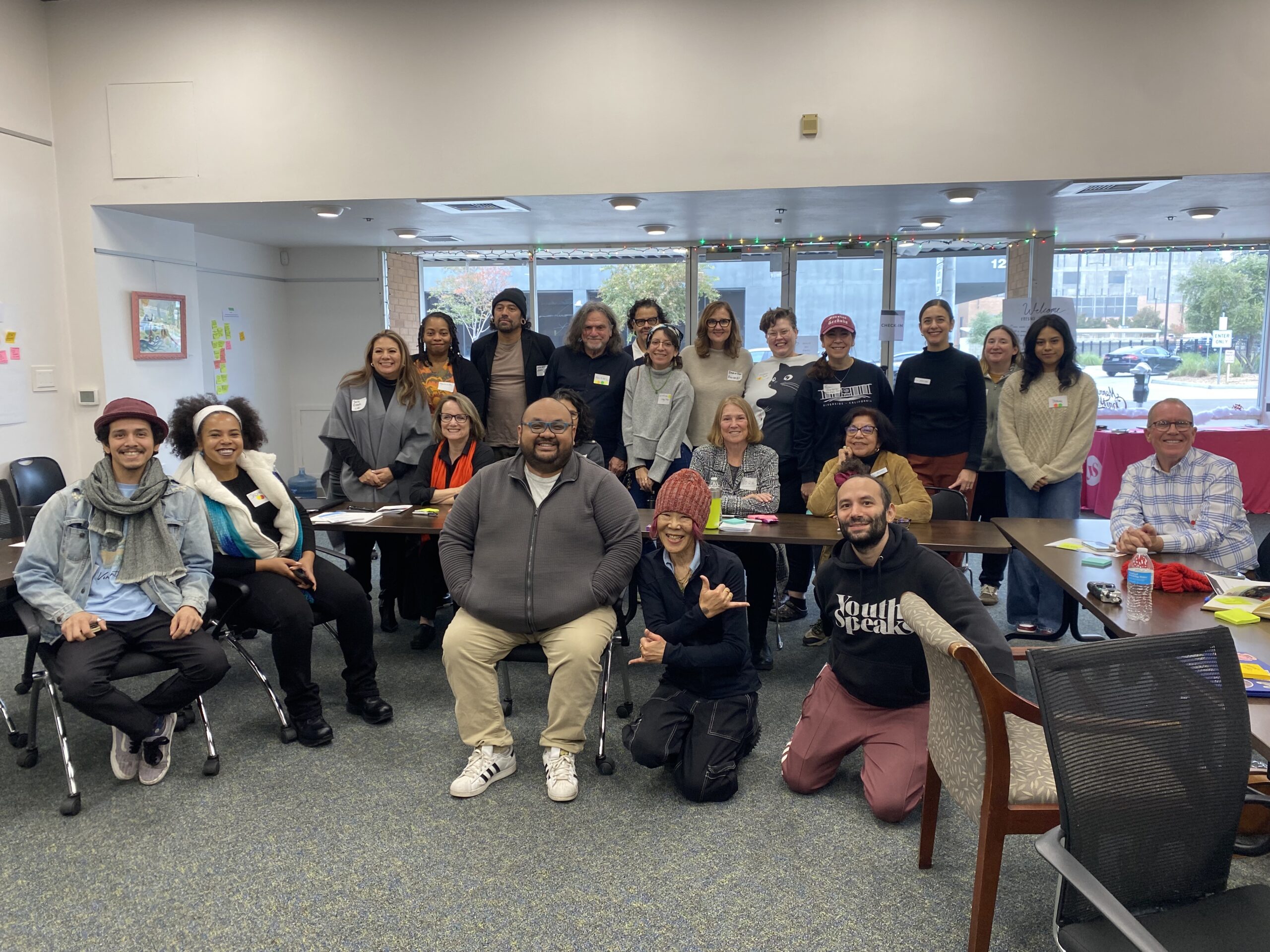
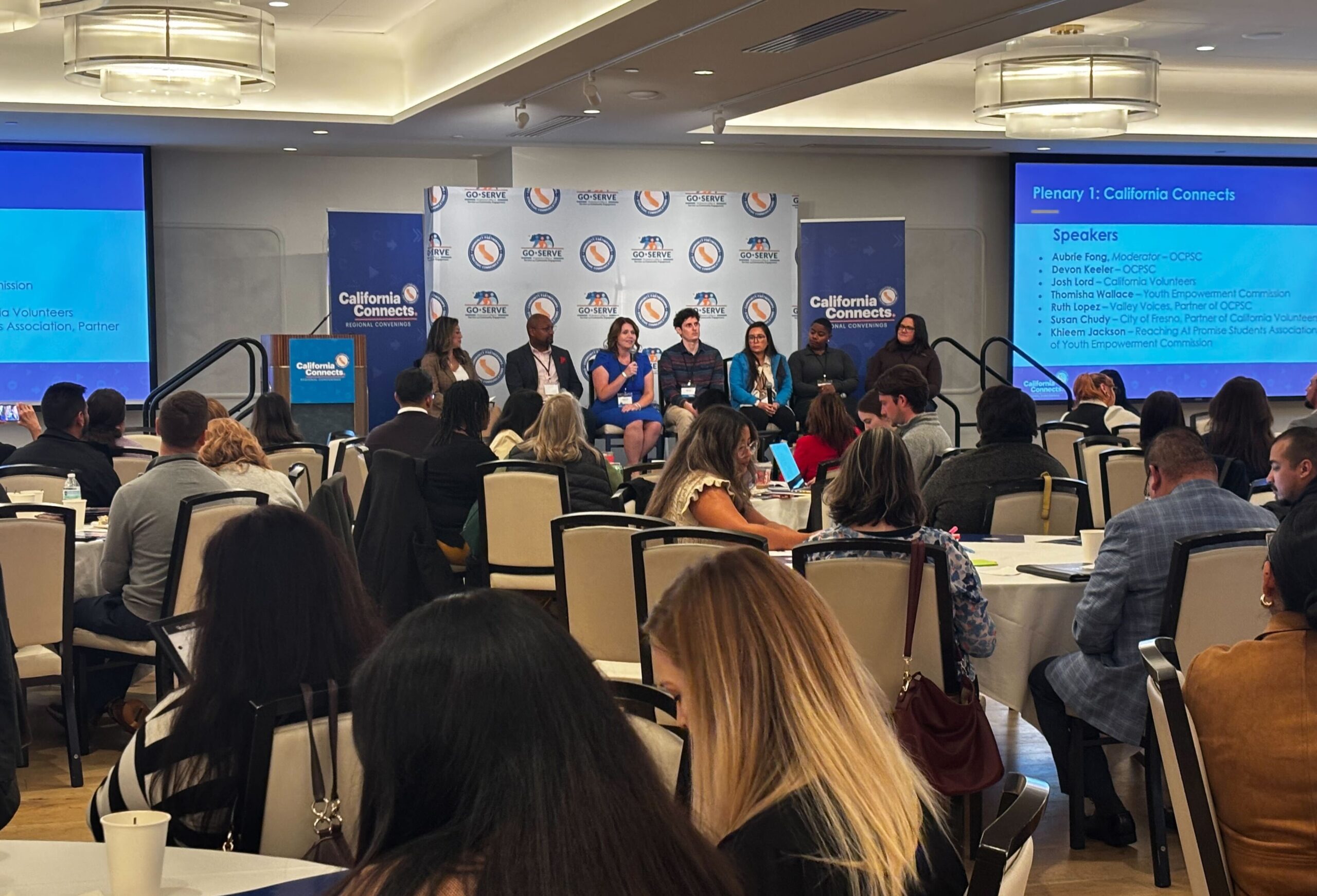
On Tuesday Nov. 18, government and community leaders from across the Central Valley gathered in Fresno for the last in a series of eight California Connects: Regional Convenings hosted by the State of California’s Office of Community Partnerships and Strategic Communication (OCPSC). The Fresno event focused on promoting collaboration and informing stakeholders of state resources and opportunities available to support community-based work.
Josh Fryday, California Chief Service Officer and Director of GO-Serve, the state office that houses OCPSC, noted that the California Connects series was developed as a strategy to build networks, increase access to information and increase community resilience in response to the cuts to services and government programs that have become a hallmark of President Donald Trump’s administration since his inauguration in January of this year.
Many organizations who attended expressed concerns about cuts to a myriad of federal funding streams under the Trump administration, citing partnerships between government agencies and community organizations as a key way to increase the resilience of communities in the coming years.
“It feels like every month we lose more and more dollars at the federal level, which really impacts the way we serve families. So the only way to really sustain the next four years is through partnerships,” said Ricardo Castorena, CEO of Binational of Central California.
Castorena likened government and community partnerships to making a peanut butter and jelly sandwich, explaining that while his organization can provide one vital ingredient, the success of their efforts depends on how well they can partner with other organizations to fill in the gaps. Castorena highlighted his organization’s upcoming Toys for Tots event, noting that while his organization can provide holiday gifts and hot meals to the 4,500 families that have registered to attend, there is not enough capacity and resources at any nonprofit to provide every resource and service needed by the community. This is where other organizations come in, who will use the event as an opportunity to provide services like immigration assistance and MediCal registration.
Attendees also pointed to the importance of partnerships as a way to facilitate the spread of information. One of the first directives handed down by the second Trump administration focused on culling information from the websites of federal departments and agencies, with a specific focus on removing content and data related to public health. The impacts of the administration’s crusade against public health, in addition to the increased efforts meant to undermine the Affordable Care Act, have already begun to materialize in the Central Valley.
“What we’re going to see is a lot of people going back to utilizing the emergency room as their [main] access to healthcare because they’re not going to be able to continue to see their provider,” said Nataly Santamaria of Vision y Compromiso, a community health organization that focuses on promoting health education within Latinx populations. “Things that we have worked on for the last 10 years [as far as] educating our community and [building] habits will unfortunately be lost. I see us going back 20 years.”
One major area of focus at the California Connects event was investment in youth. The most recent data collected by the Harvard Youth Poll, a national poll administered twice a year by the Institute of Politics at Harvard Kennedy School, provides sobering insights into the realities facing young people across the country. Less than half of polled youth reported feeling a sense of community, with youth who identify as feeling disconnected from community reporting increased struggles with mental health and disengagement from politics. As concerns about the nation’s economy dominate the news cycle, more than 4 in 10 young people stated that they were just scraping by financially.
GO-Serve oversees a slew of programs offering solutions to these issues. In addition to OCPSC, GO-Serve houses the California Youth Empowerment Commission and California Volunteers, which oversees the state’s various paid and volunteer service opportunities administered through programs such as #CaliforniansForAll College Corps, California Climate Action Corps and the Youth Service Corps.
In a nation where many young people feel apathetic about political and civic involvement, Thomisha Wallace, Executive Director of the Youth Empowerment Commission, seeks to uplift the importance of providing youth below the legal voting age with the opportunity to shape state policy and legislation, citing a specific focus on populations such as foster youth, who are unable to vote despite having almost every facet of their life shaped by state programs and policy.
The California Service Corps has expanded into the largest service force in the nation, and is seemingly an effort by the state to kill two birds with one stone by providing paid, entry-level work opportunities for young adults while increasing political and community engagement through service learning and leadership.
#CaliforniansForAll College Corps, a new program currently in its fourth year, provides college students with part-time, paid employment at local organizations and nonprofits focused on issues such as climate resiliency and food insecurity.
“We want them to know that these opportunities are there, but we also want them to know that we need them to serve,” said Fryday. “We need them to step up, to help their community, to work at food banks, to tutor and mentor [and] to take climate action. That’s why we’ve created College Corps and we want everyone who’s interested in changing the world to step up and sign up.”
Attendees asserted that while factors such as voter turnout data could imply that the chances of creating political investment among younger generations are slim to none, they strive to be optimistic about the ability of youth to create positive change in their communities.
For Wallace, there is no other option. “Empowering our young people and giving them what they need, not just to survive, but to thrive is important for the survival of our world.”
“I actually have always been optimistic that the future generations will show us the way and will inspire us,” said State Assemblymember Dr. Joaquin Arambula, who asserted that leadership and service opportunities for youth are integral to the betterment of both local communities and California at large.
Santamaria shared a hopeful sentiment about the potential of future generations, discussing her experience observing youth navigating systems alongside their families and expressing that, “I see youth being more outspoken and bigger advocates. They’re not afraid to say what is needed and to speak on behalf of their families.”
Attendees agreed that the convening provided a chance to share their hopes for the future and expressed their eagerness to form partnerships that will make their communities more resilient in the coming years. Despite the focus on the current state of the federal government, both the state government and community leaders echoed their commitment to playing the long game and creating solutions that will drive change years or even decades from now.
During opening remarks, it was announced that the Fresno leg of the California Connects series had more attendees than any other regional convening. In the midst of the anger and grief expressed by attendees, a palpable sense of optimism was present among Central Valley communities that are no strangers to soldiering on through hardship. Leaders across the state stood firm in their commitment to focus on creating lasting, positive change at the state and local levels in the face of changes at the federal government level.
In the wake of an election cycle that saw many high-profile victories for politics at the local level, events like the California Connects series indicate the start of a potential renaissance of local and regional politics. Local politics have long held the role of the underdog, characterized by low engagement and the widely-held perception that city and county government affairs are largely uninteresting.
As the country enters the second year of the Trump administration, local politics have the potential to reinvigorate political participation in an electorate desperately in need of optimism. If the attendees of Fresno’s California Connects: Regional Convening are any indication, the possibility of a thriving, regional grassroots political movement built on coalitions and partnerships seems more possible than ever.