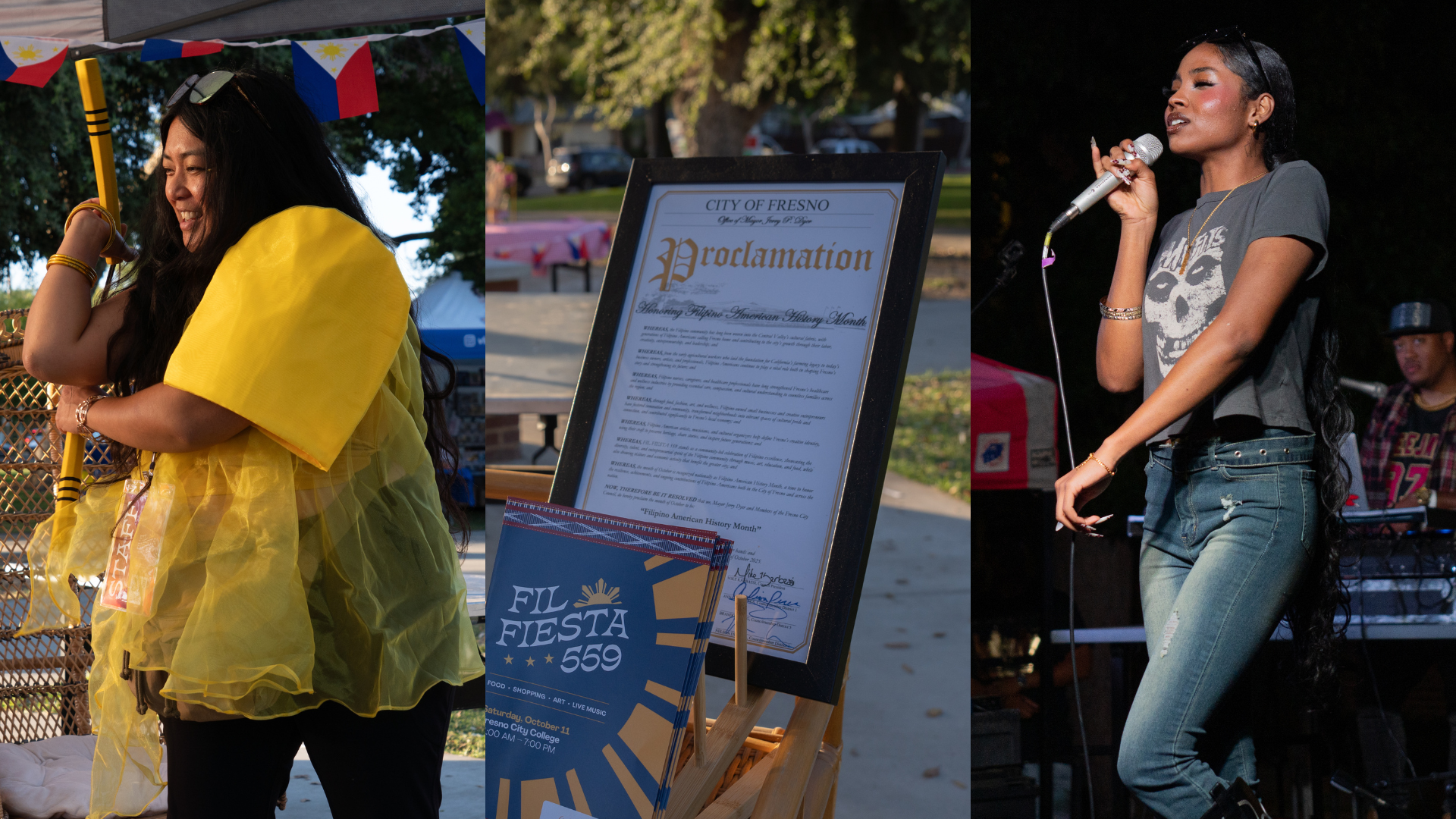
FIL FIESTA 559, a Filipino cultural festival, returned for its second year at Fresno City College on Oct. 11. Activities ranged from food to music to ornament crafting, but the event also featured profound conversations on identity and how to empower a community during difficult times.
“Because of where we are and because of things that are happening in the world around us, celebrations like this are extra important, to give our community a sense of home,” said Christine Rose, the founder of FIL FIESTA and business owner of maarte.
She said the festival was a way of gathering the community together to have conversations on identity, find resources and enkindle people into being more vocal in times of crisis or injustice.
“I know that a day is not enough to erase the worries,” Rose said. “I’m not asking everyone to just think that this is not happening in our world outside.”

The day was marked by a cool autumn breeze that carried lechon and adobo aromas into the air. Food vendors attended to hundreds of customers in the parking lot outside of FCC’s Old Administration Building and Cafeteria.
Mika Lopez, an attendee who is a Fresno State student, said she heard about one of the festival vendors, Bread and Butter, fundraising relief for victims of the September magnitude 6.9 earthquake in Cebu, Philippines. From there, she learned about FIL FIESTA.
“Being immigrants, it’s just nice to see your people here and seeing your culture,” Lopez said.
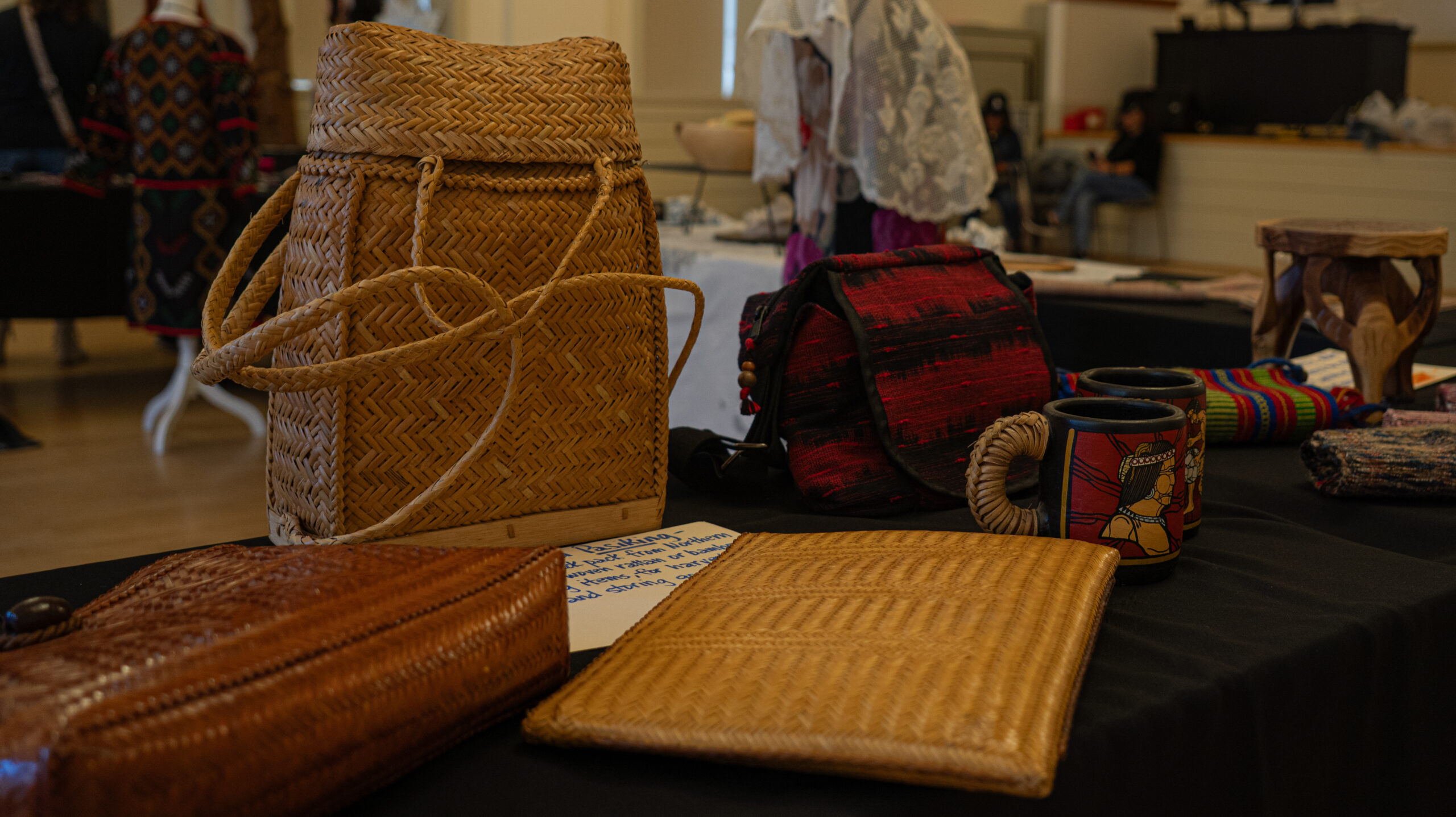
In the quiet corner, Kultura Korner featured articles of clothing, traditional bags and literature among the wide assortment of Filipino artifacts.
Nancy Hoff hosted the ensemble of pieces she gathered over the decades. She has lived in Fresno since 1967, travelling annually to the Philippines and adding new pieces to her collection.
She said Fresno had many fiestas and festivals in the past, which were brought by an influx of new Filipino immigrants in the Central Valley. However, these celebrations have disappeared as the generations grew older, and younger Filipinos did not continue these traditions.
Hoff said this trend has been reversed by newer Filipino generations, as evidenced by FIL FIESTA.
“We seem to unite more if it’s a gathering and if it’s fun,” she said.

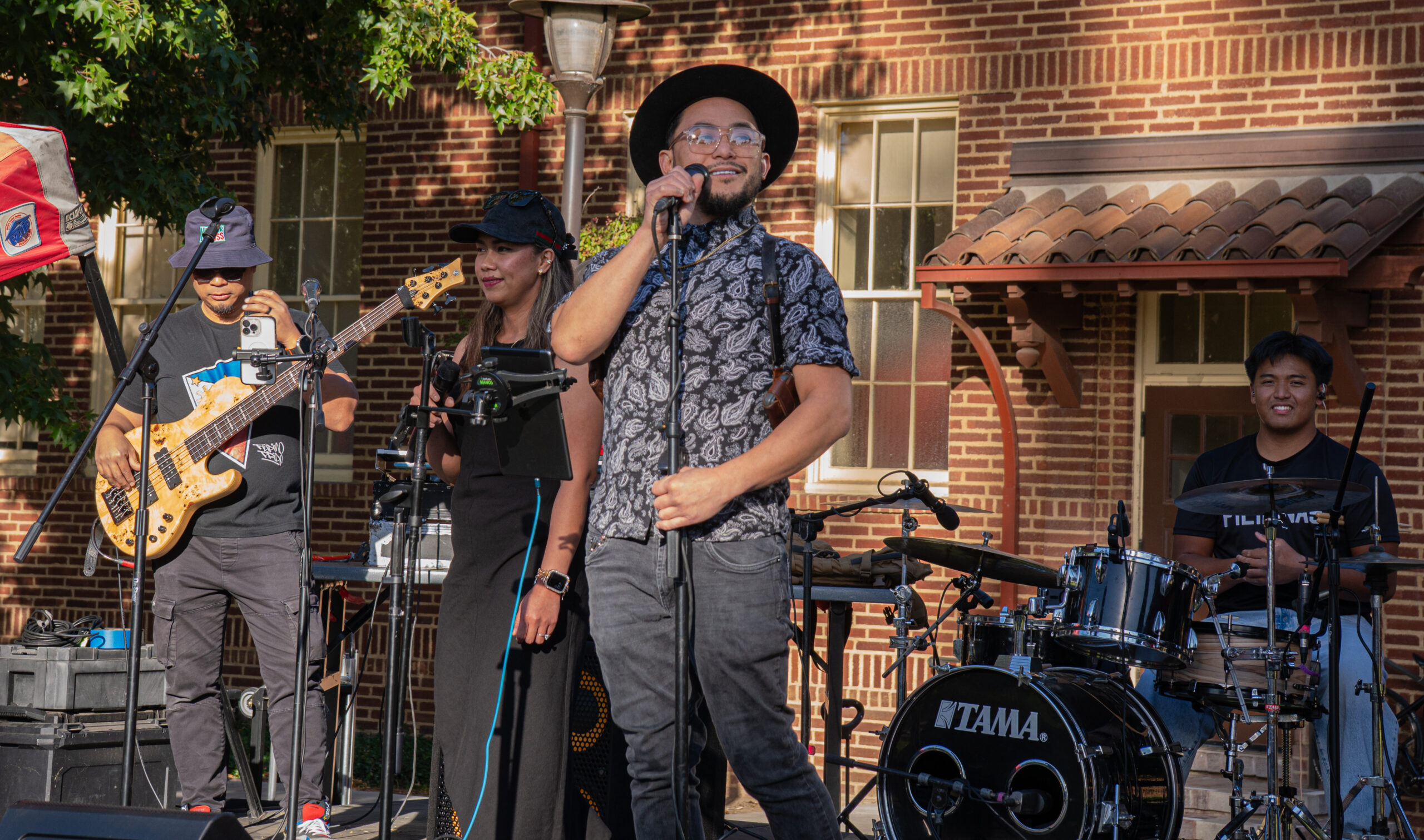
Businesses, organizations and student clubs booths surrounded the main stage where performers delivered vibes throughout the day.
Maureen Muñoz is the secretary of the Filipino American National Historical Society’s (FANHS) Delano chapter and worked at the organization’s booth.
She said it was important to have a remembrance of history as a way to connect with people and stay in touch with Filipino culture. She sees a disconnect between older generations, who lived and breathed history, and younger generations who lack knowledge.
“I think it’s really important now, that we transition into a digital era, to kind of digitize that history and find a way to bridge the gap,” Muñoz said.
Bass-boosted speakers pumped out heart-pounding thumps for every drum shuffle and guitar solo. Local artists showed off their original pieces or covers of pop music and Filipino karaoke classics, including “Don’t Stop Believin’” by Journey.
Filipino student organizations from Fresno State and the University of California, Merced also performed renditions of traditional Filipino dances such as the romantic cariñosa or pre-colonial tinikling.
Jae’Roze Tate, a Black-Filipina rapper and Howard University student, headlined the festival at the request of Rose. She ran the show with songs from her English and Tagalog album, “BLA$iAN,” which she wrote in high school.
“I came out of the womb, wanting to sing and dance,” Tate said. “My heritage, my identity, the Tagalog, it will always weave into that in some shape or form.”
She looked up to rappers including Nicki Minaj and Lauryn Hill and wants to follow in their steps of being an inspiration for young girls who look like her. Her experience growing up in the Philippines was difficult because of poverty and also being the only Black girl in many spaces she was in.

“I never really truly felt Filipino enough for Filipino people,” she said. “Despite growing up there, despite speaking the language, despite being born and raised in the Philippines. Like, I’m as Filipino as it can get.”
Tate said many factors in society affected how people perceive her and also what it means to be Filipino. She stated it is important to develop a strong sense of identity and that can help many diaspora Filipinos who don’t feel accepted.
“If you focus too much on the people who don’t accept you, you’re going to fail to see the people who do,” Tate said. “There will always be people who love and accept and you’re not gonna be able to please everyone.”
She said there needs to be solidarity with all minority communities, who also face the struggles of being treated differently as people of color in the U.S.
“It’s really important to have events like this, to reinforce the strong sense of unity,” Tate said. “At a time like this, it is more important now than ever to be a community because we can’t get anything done by ourselves.”
Rose hoped for guests to learn more about Filipino history and bring people closer to their culture.
Inspired by her yoga practitioner experience, Rose believes staying connected to one’s roots and having a strong sense of self provides comfort even in the face of chaos.
“It is about knowing ourselves, so that we can go back home anytime we want,” Rose said.