

The epic rise and fall of brat summer brought about this revolutionary sense of finding identity in the not-so-orderly early adulthood, where going against the current of mundanity and presentability was welcomed. Charli XCX impressively created a lasting tidal wave of self-acceptance that brought many iconic moments, realizing an unforgettable era in pop culture history that will continue to influence the culture to nurture a sentiment of abstraction.
A personally remarkable moment from the era of brat was “Girl, so confusing featuring Lorde,” a track that turned electro pop synths into a riveting anthem on camaraderie, where Charli and Lorde literally worked out whatever discomfort they experienced on a remix.
Lorde’s verse was complicatedly personal, mirroring Charli’s silly, spitefully charming flow. Lorde discussed her struggles with her eating disorder and how insecurity had harmed herself and her relationships. With the partnership from the pop icons, “Girl, so confusing” seemingly allowed for Lorde to lay out a new foundation for her latest and refreshingly exciting era for her fourth album, Virgin (2025).
Lorde had stepped out of the direct spotlight of fame and stood with her persona of the disillusioned celebrity she investigated on Solar Power (2021) over folky rhythms and glamoured rhymes. The artist has now come back into the studio ready to continue diving into her life as she continues to deal with love, intimacy, change, and pain; diving back into the artist she was when the synths of Melodrama (2017) rocked the world for those brave enough to listen to her heartache and authenticity.
If you are unfamiliar with her surgically incisive words and unbalanced sonic adventures, this may unsettle you in the most comforting way only an artist like Lorde can accomplish.
“Hammer” opens the record with a disorienting thud from the mention of “ovulation” or the singer’s ebbing sexual identity: “Some days I’m a woman, some days I’m a man.” Seemingly standing on her feet after heartbreak, Lorde is bright eyed, as a born-again virgin wanting to experience and feel the rush of the world in its truest most brutal sense. The synths of the track ricochet through the eardrums like a deafening blow that reaches its height at the end; ushered by faraway keys the song’s outro brings goosebumps and edges the excitement of the record.
Exploring her identity as an artist, as a woman, and an investigator of life, “Virgin” features the artist stripped down beyond just skin, but bare bones. The album cover features an X-ray of the artist’s pelvis, hip bones, spine, including her IUD photographed by Heji Shin. The cover serves as a depiction of her femininity, while the record works to serve as a redefinition of what virgin is.
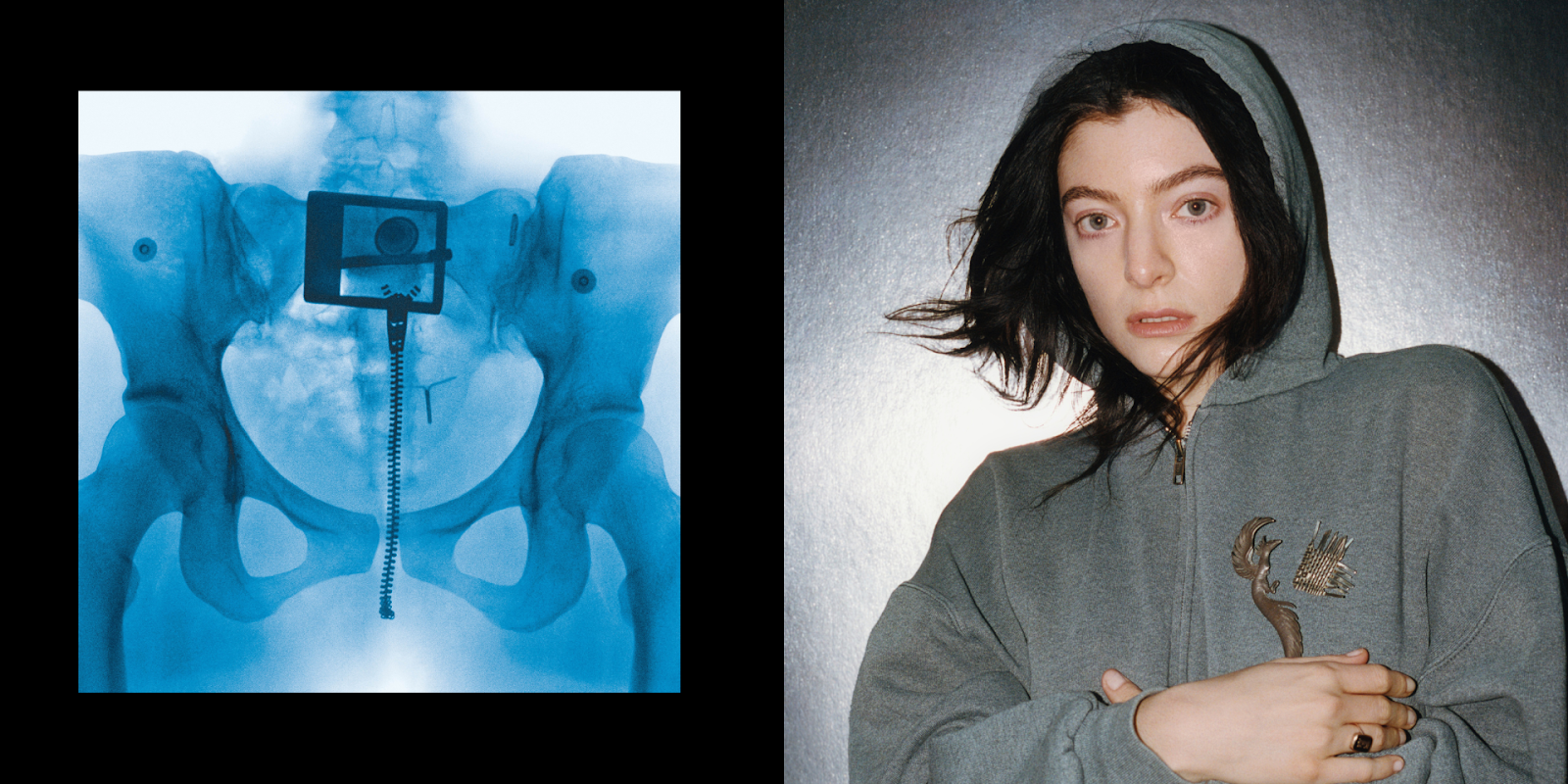
Heavily impressed by the world around her, but unfazed by frivolousness, yearning for the next challenge or adventure. After years of laboriously creating for the world, the artist takes time to protect her vulnerability while also finding power in it, ready to share again.
New York City works as the birthing ground for the record with its grit and buzz fueling the prose as she recollects moments of love, piercings, and is even spotted cycling around singing her heart out for the music video for the album’s lead single, “What Was That.”
This track allows for the artist to sit with heartache only long enough to miss the literal ecstasy of love in all its unpredictable chemical reactions. Lorde is singing with an unbridled restraint, longing in the nostalgia of the situationship with confusion and even seeking comfort in the discomfort. The track ends with “When I’m in the blue light, I will make it alright” which brings a sense of inner calming that plays a contrast to the distorting production; a clever elaboration on what heartbreak embodies within real lovers.
The possibility of motherhood frightens and empowers her sexuality in “Clearblue” as her voice, unwavering and digitally euphoric, reveals complexity between the line of a potential pregnancy and the freedom of her 20s where intimate expression is as accessible as contraceptive use. The fear and liberation of unprotected sex holds an anguishing significance to her as she struggles to find the Clearblue pregnancy test to keep as a reminder of the scare. The short song is lyrically impressive while tantalizing and touching.
Motherhood remains a strong motif as she reflects on her own relationship with her mother. On “Favorite Daughter”, Lorde realizes she has fulfilled the foundation her mother, Sonja Yelich, set as a poet. Lorde looks upon her mom as someone she has accomplished making proud, which was not easy growing up in the limelight with a Grammy-winning career, a touching sentiment that further reveals how important the Arts have always been for the New Zealand singer. She continues to reference the refuge of her mom in the melodically hypnotizing “Current Affairs”, as she attempts to hide from the throes of passion that is as insatiable as it is paralyzing.
The standout moments of the album are found nearing the record’s end with “Broken Glass” finding the singer struggling between her eating disorder and her superstitions. The heavy song plays with perspective as she sings to the version of herself obsessed with image is personal as she recounts counting calories. Evoking a sense of control and personality that the entire record protects in a revealing and flavorfully pop-friendly manner.
“If She Could See Me Now” is a punk-ish rhythm of empowerment demonstrating her process of heartache that churns confidence out of torment that was explored throughout the album. She finds strength in her songwriting and weightlifting as she sings to the version of her past self that is refreshingly inspiring. Featuring a simply boastful interpolation of Baby Bash’s “Suga Suga,” cementing her swagger with subtlety as an inspired artist that knows her way around a song.
“Virgin” illuminates an experience that is as self-revelatory as it is pleasant to unfold. Lorde creates a project that allows her to reflect on the good, embracing the bad. On “Shapeshifter”, the eloquent violins and trippy production explores her resilience, who remains sensitive and vulnerable to life and love in what is the album’s most arresting moment. Lorde proves that there is control in our unbalanced world and can inspire people to know that there is always a possibility to start again; carrying a matured and unfazed readiness to continue discovering the reinvention and freshness of your inner being.